What happened in that Tennessee school board meeting is simple to describe and hard to defend.
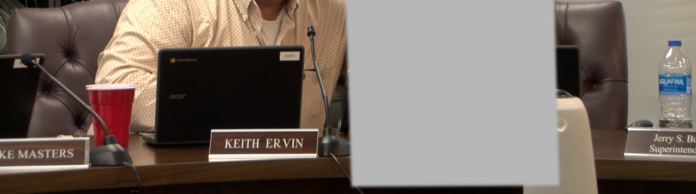
A student showed up to speak about school policy—curriculum and restructuring. In the middle of that, an elected official, Keith Ervin, put his arm around her and said, “God you’re hot,” then asked where she went to school. That’s not a gray-area comment. It’s direct, personal, and completely disconnected from why she was there.
And just as important as what was said is what wasn’t done.
No one in the room stopped it. No one immediately corrected it. There was nervous laughter, and then the meeting moved on. That silence is a big part of why the backlash is as strong as it is now. When something crosses a line in a public setting—especially involving a student—people expect someone in authority to step in right then, not later.
The reaction outside the room filled that gap.
The video spread, a petition gained thousands of signatures, and criticism widened beyond Ervin to others in the room, particularly over the perception that officials were too comfortable letting it slide. That’s where terms like “accountability” and “good ole boy system” start showing up—because people aren’t just reacting to one comment, they’re reacting to what looks like a pattern of tolerance.
Ervin’s defense leans heavily on intent. He says he was “old school,” that he meant it as praise, that context is missing. But intent doesn’t carry much weight here, because the setting defines the standard. He’s not a private citizen making an offhand remark—he’s a school board member speaking to a student, in a public meeting, on camera.
That changes the rules.
The role requires a level of restraint and awareness that goes beyond personal style or generational differences. Saying you “didn’t mean anything by it” doesn’t undo the fact that the comment shifted the interaction from professional to personal in a setting where that boundary matters.
Now the response moves into formal channels.