The $900 billion National Defense Authorization Act (NDAA) passed the House with bipartisan momentum last night — a routine legislative “layup” by most historical standards. And yet, true to form, Washington found a way to mire the process in suspicion, political jabs, and bureaucratic friction. At the center of this year’s tension? A quietly inserted provision demanding access to unedited strike footage from Operation Southern Spear, the Pentagon’s latest anti-narco-terrorism campaign in the Caribbean.
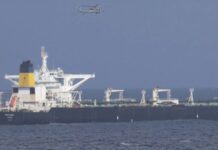
On paper, this is straightforward oversight: Congress wants eyes on the footage of military strikes that occurred in September, during an operation targeting suspected narco-terrorists aboard a smuggling vessel off the coast of Latin America. The vessel was struck not once but twice — the second time while survivors reportedly attempted to radio for help. That second strike is what ignited the controversy.
As part of the NDAA, lawmakers are threatening to withhold 25% of Defense Secretary Pete Hegseth’s travel budget until the Pentagon turns over unedited video of the strike to the House and Senate Armed Services Committees. The demand underscores Congress’s increasing unease with the operation and how it has been characterized by the administration and the military chain of command.
Pentagon officials, including Adm. Frank Bradley, who gave the final go-ahead for the second strike, have already briefed select lawmakers behind closed doors, showing them the full footage. But the interpretations of that video split along party lines — Republicans claimed the strike was fully justified; Democrats claimed it painted a very different picture.
Rep. Adam Smith (D-WA), ranking member on the Armed Services Committee, went so far as to say that if the video is made public, it would “clearly” disprove the Republican account. Meanwhile, House Armed Services Chair Mike Rogers (R-AL) dismissed the notion of further investigation, declaring, “It’s done. I’ve got all the answers I needed.”
This political trench warfare over military footage is a revealing moment. On one side, Democrats are casting doubt on the legality of the operation, suggesting potential war crimes or, at minimum, misuse of force. On the other side, Republicans insist the strikes were lawful, cleared by military and civilian legal counsel, and part of a necessary escalation in the fight against increasingly violent narco-terrorist networks.
President Trump, characteristically direct, stated he had “no problem” releasing the footage. But Secretary Hegseth has so far refused, citing operational security and the safety of U.S. troops.
It’s important to note what the law says: military force can be applied against hostile actors engaged in armed conflict — and that includes narco-terrorists, especially when they are part of transnational criminal networks that operate like paramilitary groups. These are not fishermen caught in a crossfire; they’re armed operatives trafficking weapons, drugs, and often violence across borders.
The second strike — the one that targeted survivors — is where the gray area lies. Critics say the operatives were radioing for help, possibly attempting to surrender. The Pentagon argues they remained active combatants who posed a continuing threat and were likely seeking reinforcements. Both legal precedent and the rules of engagement permit continued force if a threat persists.
But with Democrats pushing for transparency and the footage now the subject of legislative leverage, the administration must choose between two difficult options: release the video and risk fueling political backlash, or withhold it and feed the perception of a cover-up.