
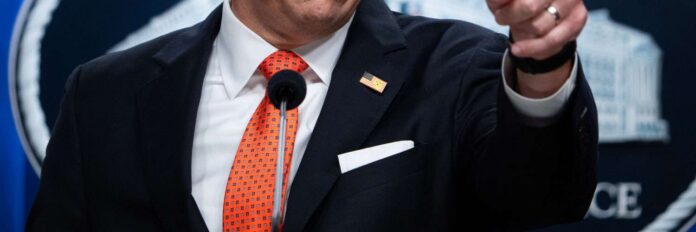
In his first press conference as acting attorney general, Todd Blanche laid out what he described as a sprawling fraud landscape tied to taxpayer-funded programs. According to Blanche, the department is currently handling more than 8,000 fraud cases, with potential exposure reaching over 1 trillion dollars annually. That figure, as he presented it, reflects not just confirmed losses but the scale of programs vulnerable to abuse.
To ground that claim, Blanche pointed to recent prosecutions. One case involved a South Florida insurance brokerage firm that admitted to a scheme tied to Affordable Care Act enrollments totaling more than 160 million dollars.
Another centered on a California man accused of submitting roughly 270 million dollars in fraudulent Medicaid claims related to prescription drugs. Combined with other cases, officials say recent actions have already produced guilty pleas tied to about 500 million dollars in fraud.
But Blanche emphasized that these examples represent only a small portion of what investigators believe is happening.
The response, at least structurally, is already underway. The Justice Department is creating a National Fraud Enforcement Division, intended to centralize and expand efforts across agencies. That unit is expected to work alongside a White House-led task force coordinated by Vice President JD Vance, signaling a broader, multi-agency push rather than isolated prosecutions.
The administration’s messaging is direct: enforcement is ramping up, and the scope is national. That includes scrutiny of how federal funds are used at the state level, with particular attention already directed at programs in states like Minnesota, California, and New York.
At the same time, the political backdrop is hard to separate from the policy. Blanche’s appointment follows the removal of former Attorney General Pam Bondi, a move the president has not publicly explained in detail. Blanche declined to speculate on the reason, stating only that the decision rests with President Trump.
Meanwhile, figures within the administration, including Vance, have argued that safeguards against fraud were weakened in prior years, contributing to the current scale of the issue. State officials in affected areas have pushed back, warning that aggressive federal actions risk becoming entangled with political disputes rather than remaining focused on enforcement.
For now, the Justice Department is setting its position clearly: the problem is widespread, the numbers are large, and the response is being scaled to match.