
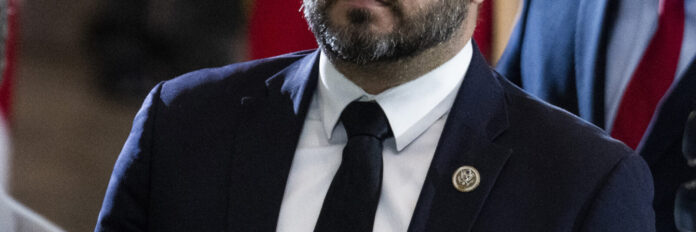
If Ruben Gallego is seriously eyeing a 2028 presidential run, he may have a bigger problem than convincing Democratic primary voters. He may have to convince them that his campaign account isn’t doubling as a travel rewards program.
A new report based on Federal Election Commission filings is shining an uncomfortable spotlight on how the Arizona senator has spent campaign and PAC money over the past several years. The records show a pattern of expenditures that included family travel, Disney trips, childcare costs, luxury accommodations, Super Bowl tickets, and other expenses that critics say look less like campaign necessities and more like lifestyle perks.
The scrutiny comes at an awkward moment for Gallego. The freshman senator has been generating increasing buzz as a potential Democratic presidential contender, making every financial disclosure far more interesting than it might have been otherwise.
According to the filings, Gallego used campaign and PAC funds to help cover trips involving destinations such as Disneyland, Disney World, Miami, Chicago, and even St. Barts. While his office insists every trip was connected to legitimate political events, fundraisers, or PAC activities, the optics are already generating headlines.
One of the most eye-catching examples dates back to Super Bowl LVII in Arizona. Gallego and former Congressman Eric Swalwell operated a joint fundraising committee called the Swallego Victory Fund, which spent more than $37,000 on tickets and meals connected to a fundraiser surrounding the game.
The fundraiser reportedly charged $5,000 per attendee and raised more than $56,000. After expenses, each lawmaker netted roughly $8,000.
Gallego’s team points out that campaign fundraisers at major sporting events are common practice and that the tickets were purchased at fair market value. That’s true. But critics are asking a different question: whether voters will view these expenditures as prudent stewardship of donor money.
Then there are the family-related expenses.
Gallego spent roughly $18,000 from campaign and PAC accounts on childcare since 2019, including a $400 payment to his mother-in-law for babysitting services. The senator has aggressively defended those expenditures, noting that FEC rules explicitly allow candidates to be reimbursed for childcare costs incurred because of campaign activity.
His argument is straightforward. Congress shouldn’t be reserved for the wealthy or for people whose children are already grown.
“I’m one of the few members of Congress with young children,” Gallego said, adding that balancing family responsibilities with public service creates costs that many Americans understand all too well.
Legally, he appears to be on solid ground. Politically, however, the debate is less about legality and more about perception.
That becomes especially relevant when looking at some of the travel expenses.
Let me clear the air on some of these stories swirling around. The FEC has stated that childcare may be reimbursed. There is a simple reason: we want Congress to look like America. Not just people without children, those with grown children, or those from wealthy backgrounds.
It…
— Ruben Gallego (@RubenGallego) June 22, 2026
Records show Gallego attended PAC retreats at Disney properties while bringing family members along. One Disneyland stay alone cost nearly $1,500 before airfare. Another trip involved Miami during his wife’s birthday weekend, where filings show a hotel stay exceeding $9,000.
His office says that Miami trip involved nine separate fundraising events that generated more than $50,000. Supporters will likely argue that raising money requires travel and that fundraising often happens where donors gather. Critics will argue that luxury destinations somehow seem to keep appearing on the itinerary.
The timing of all this matters.
Gallego recently traveled to South Carolina, a state that traditionally serves as a launching pad for ambitious Democrats with national aspirations. No one announces a presidential campaign years in advance, but political observers are already watching his moves closely.
And that’s what makes these spending records more than a routine campaign-finance story.
A local congressman can often survive questions about travel expenses without much notice. A potential presidential candidate doesn’t get that luxury. Every receipt becomes a talking point. Every hotel bill becomes a headline. Every family trip becomes fodder for opponents looking to paint a picture.
Gallego insists the spending complied with federal rules and was connected to legitimate political activity. The filings themselves appear to support that claim.
But as politicians from both parties have learned over the years, something can be legal, disclosed, and fully compliant—and still become a political problem if voters conclude it doesn’t look right.


