
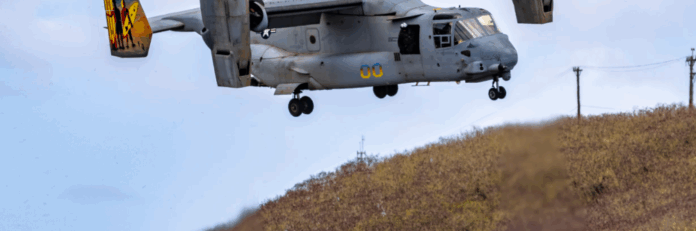
A dramatic leadership shakeup has rocked a Marine Corps MV-22B Osprey squadron based in Hawaii, with the Corps confirming that the entire top leadership team of Marine Medium Tiltrotor Squadron 268 has been relieved of duty.
The removals — of the commanding officer, executive officer, and senior enlisted leader — come amid growing scrutiny over operational readiness and safety across the Corps’ aviation units.
Major General Marcus Annibale, commander of the 1st Marine Aircraft Wing, took the decisive action, citing “a loss of trust and confidence” in the squadron’s ability to uphold critical safety and readiness standards. That phrase — often used as a catch-all within military protocol — offers little detail but signals a serious breakdown in leadership.
Lt. Col. Shaina M. Hennessey, who had taken command of the squadron less than a year ago in December, was specifically named in the Marine Corps’ statement.
Hennessey, a naval aviator since 2011 and a Marine officer since 2007, had received multiple service commendations throughout her career, including two Meritorious Service Medals and two Navy and Marine Corps Achievement Medals. Yet even a decorated record wasn’t enough to preserve her command in the face of safety concerns — a reminder that the standards for aviation leadership remain unforgiving.
Also relieved were Sgt. Maj. Jamie Lampley, the unit’s senior enlisted leader, and the unnamed executive officer. The Corps has withheld additional details about the latter, even as a transition has already taken place.
According to updated information, Lt. Col. John J. Campbell and Sgt. Maj. Joshua J. Henderson have assumed command roles, now leading the squadron at Marine Corps Base Kaneohe Bay.
While the Marine Corps has not linked the firings to any specific incident, the Osprey platform has faced renewed scrutiny in recent years due to a series of high-profile crashes and mechanical failures. The aircraft — capable of vertical takeoff and landing — is technologically complex, and its demanding maintenance and flight protocols leave little room for administrative or procedural missteps.
The Corps’ official statement emphasized its “commitment to implementing best practices” and coupling “well-prepared pilots and crews with safe, mission-ready aircraft.” However, behind the polished language lies a deeper concern: when the top three leaders of a single squadron are simultaneously removed, it points to systemic issues, not isolated lapses.