
After four long years of stagnation, a case that once looked all but forgotten has exploded back into the spotlight — and with it, serious questions about the priorities of federal law enforcement under the Biden administration.
The arrest of Brian Cole Jr., the man now charged with planting pipe bombs outside the Democratic and Republican National Committees on January 5, 2021, has reignited scrutiny over how and why this investigation seemingly went cold — despite the FBI already possessing damning evidence.
Attorney General Pam Bondi didn’t mince words at Thursday’s press conference. Flanked by FBI Director Kash Patel, Deputy Director Dan Bongino, U.S. Attorney Jeanine Pirro, and other senior officials, she laid out a troubling narrative: the evidence that ultimately led to Cole’s arrest wasn’t newly discovered, it had been “sitting there collecting dust” at the FBI.
“This cold case languished for four years,” Bondi said, “until Director Patel and Deputy Director Bongino came to the FBI.” According to Bondi, the problem wasn’t lack of clues — it was lack of will. Under President Trump’s direction, the investigative team was rebuilt, the evidence reexamined, and within months, what hadn’t been done in years finally was: a suspect identified and charged.
The charges against Cole are grave: transporting explosive devices across state lines, attempting to destroy federal property using those explosives, and more to come. But perhaps just as serious is the allegation that the previous administration — and specifically the leadership at the FBI under Director Wray and Attorney General Garland — failed to meaningfully pursue the case.
That failure is being called out not only as bureaucratic oversight but as something far worse: willful neglect. Bongino pointedly suggested that the prior administration deprioritized the investigation, even as political figures weaponized the narrative for electoral gain.
“This is what it’s like,” he said, “when you work for a President who tells you to go get the bad guys and stop focusing on other extraneous things not related to law enforcement.”
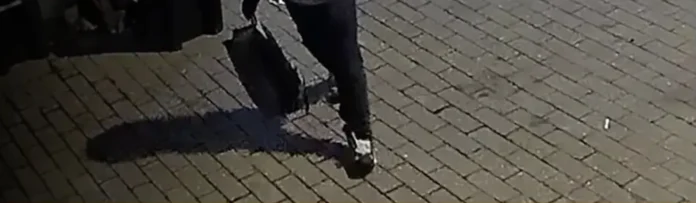
The investigative breakthrough wasn’t about a whistleblower or last-minute tip. It was meticulous police work — data-mining more than three million lines of information, scouring thousands of hours of CCTV footage, and tracing the sales of common components like black end caps, wires, and batteries across the country. According to Piero, it was “like finding a needle in a haystack.”
But the underlying question is larger than one suspect or one case. Why did it take a new administration, a new team, and a fresh directive to act on evidence the FBI already had?