
What began as a chaotic anti-ICE protest outside a Brooklyn hospital is now drawing attention not just because of the violence that erupted that night, but because of the network of repeat activists, encrypted organizing channels and familiar protest figures who appear to move fluidly from one political cause to the next.
Saturday night’s clash outside Wyckoff Heights Medical Center in Bushwick quickly spiraled into hours of confrontation after activists mobilized around reports that ICE agents had arrived at the hospital. According to officials, federal agents had transported Nigerian national Chidozie Wilson Okeke to the facility after he complained of needing medical attention during his arrest.
Okeke, authorities say, had overstayed a tourist visa after entering the United States in 2023 and had previously been arrested on assault and drug charges. The Department of Homeland Security also alleges he became violent during the arrest encounter and attempted to strike officers with his vehicle before being detained.
But once word spread online that ICE was present at the hospital, activists rapidly descended on the area.
By roughly 10:25 p.m., a crowd estimated at around 200 people had gathered outside the medical center. What followed was hours of escalating disorder. Protesters blocked emergency entrances, hurled garbage and trash cans at vehicles and clashed repeatedly with police officers until the scene finally calmed around 3 a.m.
Nine people were arrested.
What is now drawing increasing scrutiny, however, is how quickly the protest formed — and the profile of some of the people involved.
According to activists and immigration enforcement critics familiar with these networks, much of the organizing occurred through private channels on encrypted messaging apps and Discord servers inaccessible to the public. Participants are typically vetted before gaining access to alerts and organizing chats.
“You’re either on a text list or an email list. You get notifications,” Ira Mehlman of the Federation for American Immigration Reform told The Post.
Mehlman argued the mobilization fits a broader pattern seen in protests ranging from climate activism to anti-Israel demonstrations and now immigration enforcement actions.
“These are well-organized and well-funded,” he said. “They’re clearly not grassroots, spontaneous disruptions.”
Among those arrested was 34-year-old Jennifer Hansen, who authorities say smashed the rear window of an ICE vehicle before attempting to flee. Hansen is no stranger to activist confrontations in New York City.
She was previously arrested during a 2023 anti-Israel protest that marched from Baruch College to the United Nations and later during demonstrations outside a Brooklyn synagogue hosting a planned appearance by Israeli Security Minister Itamar Ben-Gvir. In both prior incidents, Hansen faced charges including resisting arrest and assaulting officers, though those cases reportedly never advanced in court.
Another protester arrested Saturday, 30-year-old Presleigh Hayashida, has followed a similar activist trajectory.
Originally from Wyoming, Hayashida first emerged in New York protest circles through climate activism with Extinction Rebellion, where she reportedly served as a civil disobedience trainer. She was arrested in 2021 after helping blockade the FDR Drive during a climate protest.
At the time, Hayashida framed climate change as “the greatest threat our species has ever faced.”
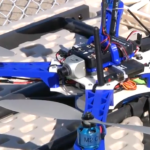
But by the following year, her activism had shifted heavily toward anti-Israel organizing. Hayashida became involved in sustained demonstrations targeting Easy Aerial, a drone manufacturer operating in Brooklyn that produced technology used by Israel and U.S. Border Patrol agencies. Protesters occupied lobbies, staged repeated demonstrations and launched email campaigns against the company before it ultimately relocated.
Critics argue these activists increasingly function less as issue-specific protesters and more as a highly mobile network of professional agitators capable of rapidly redirecting toward whichever political flashpoint emerges next.
The protests have also highlighted the involvement of local elected officials sympathetic to anti-ICE activism. New York City Councilmember Sandy Nurse, a self-described anti-capitalist and co-chair of the Progressive Caucus, attended Saturday’s demonstration and reportedly shared details regarding ICE vehicle movements with journalists on scene.
Nurse has previously advocated reducing NYPD funding and aligned herself with activist causes opposing immigration enforcement.
Yet even within far-left activist spaces, the Bushwick confrontation sparked criticism.
Some local organizers expressed concern that rumors falsely suggesting ICE was raiding hospital patients could discourage undocumented immigrants from seeking medical care. Activists on neighborhood message boards stressed that ICE had not entered the hospital to detain random patients and warned against spreading panic.
“Neighbors should not avoid getting treatment at hospitals or medical centers,” one activist wrote online afterward.
At the center of much of the mobilization effort are increasingly aggressive anti-ICE social media networks such as NYC ICE Watch, which broadcasts live alerts about federal enforcement activity and openly advocates escalation tactics.
The account has posted slogans calling for forcing “the system into a state of crisis” and has endorsed vandalism and riots as more effective than traditional political participation.
For critics, Saturday night’s violence reinforced concerns that parts of the anti-ICE movement are becoming less focused on protest and more centered around direct confrontation with law enforcement itself.