
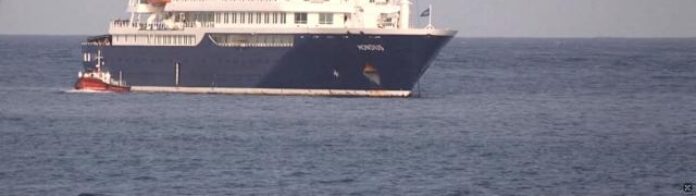
A deadly hantavirus outbreak linked to a South American cruise voyage is now causing growing international alarm after health officials confirmed the virus has spread beyond the ship itself and into Europe, raising fears about possible human-to-human transmission involving one of the world’s most dangerous viral strains.
Swiss authorities announced Wednesday that a passenger who recently returned from the MV Hondius expedition cruise tested positive for hantavirus after arriving back in Switzerland with his wife last month. The man reportedly sought medical testing at a Zurich hospital after cruise operator Oceanwide Expeditions warned passengers about a widening outbreak connected to the voyage.
Officials said the man’s wife has not developed symptoms but is currently self-isolating as a precaution.
For now, Swiss health authorities insist there is “currently no risk to the Swiss public.” But the situation surrounding the outbreak has become increasingly tense because experts now believe at least some cases may involve person-to-person transmission — a rare and particularly dangerous development associated with the Andes strain of hantavirus.
Unlike most hantavirus infections, which spread through contact with rodent droppings or contaminated environments, the Andes variant is one of the few known strains capable of spreading between humans. It also carries an extraordinarily high fatality rate, with some estimates approaching 40%.
That possibility has transformed what initially appeared to be an isolated cruise outbreak into an international public health concern involving multiple countries and a ship now caught in a diplomatic standoff over where it can safely dock.
The World Health Organization confirmed Wednesday that at least three people have died during the outbreak, while at least five others have reportedly fallen ill. WHO officials acknowledged there is growing evidence suggesting close-contact transmission may be occurring.
“We do believe there may be some human-to-human transmission among very close contacts,” said Maria Van Kerkhove, the WHO’s director for epidemic and pandemic preparedness and prevention.
Meanwhile, conditions aboard the MV Hondius have become increasingly chaotic.
Three suspected hantavirus patients were evacuated from the vessel while it remained stranded near Cape Verde off the coast of West Africa. WHO Director-General Tedros Adhanom Ghebreyesus confirmed those patients are being transported to the Netherlands for treatment and further monitoring.
“At this stage, the overall public health risk remains low,” Tedros said Wednesday, attempting to calm fears as governments scramble to respond.
But despite those reassurances, several countries have already expressed deep concern about allowing the ship to dock.
Cape Verde reportedly denied the vessel entry because of fears surrounding the outbreak. Spain later stepped in, with Prime Minister Pedro Sánchez authorizing the ship to dock in the Canary Islands for humanitarian reasons.
That decision immediately triggered backlash from Canary Islands regional president Fernando Clavijo, who publicly warned that local authorities were not comfortable accepting the ship given the uncertainty surrounding the outbreak.
“I cannot allow it to enter the Canary Islands,” Clavijo told Spanish media outlet Onda Cero.
“Neither the populace nor the government of the Canary Islands can rest assured because it is clear that the danger to the population is real.”
The dispute has now escalated into a broader political confrontation between Spain’s national socialist government and regional conservative leaders worried about public safety.
Madrid defended its decision by arguing the country has both a legal and humanitarian responsibility to assist stranded passengers, particularly because Spanish citizens are among those onboard.
“Spain has a moral and legal obligation to assist these people,” the government said in a statement.
For now, authorities continue stressing the overall risk to the broader public remains low. But the combination of a high fatality rate, possible human-to-human transmission and an international cruise ship caught between nervous governments has transformed the outbreak into one of the most closely watched public health situations in recent months..