
Drones have already changed modern warfare. Now the U.S. Navy is experimenting with another potentially useful trick: instead of carrying every drone it might need, why not manufacture some of them aboard the ship?
That is exactly what Firestorm Labs demonstrated aboard the Wasp-class amphibious assault ship USS Essex during its transit toward RIMPAC 2026 in Hawaii.
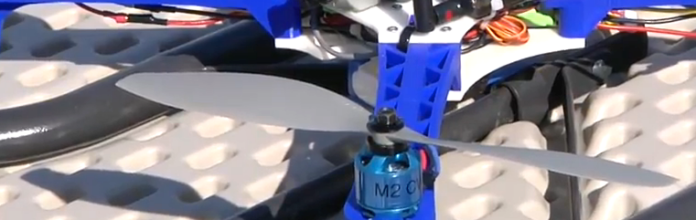
Using a containerized manufacturing system called xCell, the defense technology company produced more than 1,000 parts and built 12 of its 3D-printable Squall first-person-view drones aboard the Essex.
In other words, they put a small factory on a warship and started making drones while underway.
The immediate advantage is logistics.
“Every part xCell printed on deck is one that doesn’t need to be flown or shipped across contested waters — cutting the fuel, aircraft hours, and personnel it takes to keep a ship operational,” Firestorm said in a social-media post.
“Repairs that once meant days or weeks waiting on a resupply run can now happen in hours, on station.”
That’s the part worth paying attention to.
Keeping ships supplied is one of warfare’s oldest problems. A vessel can possess sophisticated weapons and sensors, but all of that capability depends on an enormous logistical operation supplying ammunition, replacement components and everything else necessary to keep it functioning.
In a major conflict, those supply lines become targets themselves.
Manufacturing aboard ship doesn’t eliminate that problem. A 3D printer cannot conjure drones out of seawater. Raw materials, electronics, motors and other components still have to come from somewhere, and they still consume storage capacity and weight.
But manufacturing on demand changes what has to be stored.
Instead of predicting precisely how many copies of every printable component a ship might require, sailors could potentially carry standardized manufacturing materials and produce certain items as they become necessary.
The Essex demonstration went beyond merely proving that the printers could operate aboard a ship.
Firestorm reported that waves reached as high as 12 feet while personnel assembled drones. Those aircraft were subsequently flown as simulated enemy systems during a counter-drone exercise at RIMPAC.
Service members also printed mechanical test components and fabricated repair parts needed by the Essex crew.
That last detail may ultimately prove every bit as important as the drones.
A containerized 3D-printing facility capable of producing usable military components could potentially help maintain the ship carrying it and, depending upon the equipment and materials available, support other vessels.
Then there is the possibility of adapting what gets manufactured according to the mission.
A ship preparing for reconnaissance might need one configuration of unmanned aircraft. A counter-drone operation could require something different. Maritime missions could eventually involve unmanned surface or underwater systems with components manufactured closer to where they’ll actually be used.
That doesn’t mean a single 3D printer can manufacture every kind of drone from scratch. Batteries, processors, sensors, explosives and propulsion systems present requirements considerably more complicated than printing an airframe.
Still, producing structural components and replacement parts at sea could allow crews to assemble or repair systems without waiting for an entire finished product to travel through the traditional supply chain.
Firestorm calls the concept “Expeditionary Manufacturing.”
The basic idea is straightforward: put industrial manufacturing capability inside a transportable container and move the factory closer to the people who need what it produces.
For the Navy, “closer” can apparently mean directly on the flight deck.
There are obvious questions remaining about production speed, durability, material inventories, quality control and how well such systems would operate during prolonged combat rather than an exercise. A dozen drones aboard the Essex constitute a useful demonstration, not proof that shipboard manufacturing can replace conventional military logistics.
It doesn’t need to replace them to matter.
If a damaged component that once required a resupply mission can instead be manufactured aboard ship in several hours, that is a practical advantage. If sailors can manufacture inexpensive drones according to immediate operational requirements rather than carrying every possible configuration beforehand, that’s another.