
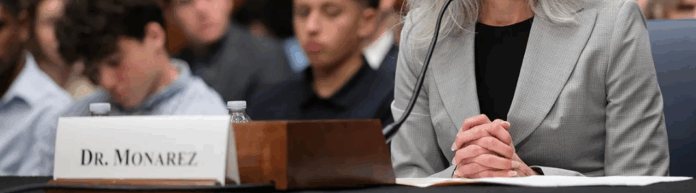
The Centers for Disease Control and Prevention is in open revolt. Less than a month after being sworn in as the first Senate-confirmed CDC director in history, Dr. Susan Monarez is refusing to leave her post—even as the White House and the Department of Health and Human Services insist she’s been fired.
Monarez’s attorneys, Mark Zaid and Abbe Lowell, are casting this as nothing short of a coup. In a blistering statement, they accused HHS Secretary Robert F. Kennedy Jr. of “weaponizing public health for political gain” and said Monarez was being targeted for refusing to “rubber-stamp unscientific, reckless directives.” Their bottom line: she never resigned, she hasn’t been legally fired by the president, and she isn’t going anywhere.
But the administration sees it differently. “Susan Monarez is no longer director of the CDC,” HHS announced flatly on X. White House spokesman Kush Desai followed up by framing the dispute in political terms: Monarez, he said, was “not aligned with the President’s agenda of Making America Healthy Again” and had refused to resign when asked.
Behind the public spat lies a deeper power struggle. According to reporting in The Washington Post, Monarez balked when Kennedy and his deputies pressed her to rescind approvals for certain COVID-19 vaccines. Instead of acquiescing, she sought help from Sen. Bill Cassidy, the ranking Republican on the Senate health committee—a move that reportedly infuriated Kennedy. Days later, her ouster was announced.
Abbe Lowell and I represent @CDCgov Director Susan Monarez. Contrary to govt statements, Dr. Monarez has neither resigned nor yet been fired. We have issued the following statement: pic.twitter.com/5OHbwMkVIQ
— Mark S. Zaid (@MarkSZaidEsq) August 27, 2025
The fallout has been swift and dramatic. At least three senior CDC leaders have resigned in protest: Demetre Daskalakis, head of the agency’s immunization center; Dr. Daniel Jernigan, head of the zoonotic disease division; and CDC Chief Medical Officer Debra Houry.
Daskalakis’s resignation letter was especially scathing, accusing Kennedy’s HHS of turning the CDC into a “tool” for policies divorced from “scientific reality.” He cited changes to childhood and maternal vaccine schedules, cuts to HIV programming, and efforts to erase transgender populations as reasons for his departure.
Monarez herself was an unusual choice for the job. She was the first CDC director without a medical degree in more than 70 years, though she holds a Ph.D. in microbiology and immunology and a long résumé in federal science agencies—from ARPA-H to Homeland Security to the White House Office of Science and Technology Policy. During her confirmation hearing in July, she had voiced firm support for vaccines, even telling senators she saw “no causal link between vaccines and autism.”
Now, she finds herself at the center of a high-stakes clash that pits Trump and Kennedy’s reformist agenda against the entrenched public health establishment. Her refusal to step aside, backed by legal firepower, sets up a potential constitutional showdown over whether a Senate-confirmed CDC director can resist removal by the executive branch.


