New York City’s ambitious push to expand free preschool access has collided with a costly and highly visible failure: tens of millions of taxpayer dollars spent on facilities that never opened their doors.
Records show the city has paid nearly $100 million in rent and utilities for 28 buildings intended to house “3-K for All” programs, many of which remain empty years after construction wrapped. The initiative, launched under former Mayor Bill de Blasio, aimed to deliver free, full-day education to 3-year-olds across the five boroughs. Instead, it left behind what insiders now describe as a collection of “phantom” preschools—fully built, fully paid for, and entirely unused.
A former Department of Education official, speaking anonymously, attributed the situation to rushed planning and poor site selection rather than deliberate wrongdoing.
According to that account, officials moved quickly to secure and build locations without confirming whether those neighborhoods actually needed additional preschool seats. In several cases, new facilities were placed within blocks of existing centers that were already struggling to fill classrooms.
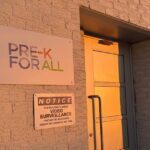
One example stands on Union Turnpike in Queens, where a completed $10.8 million facility sits unused in an area that already had excess capacity. The city continues to pay roughly $500,000 annually in rent for the site. Nearby, an existing center reportedly still has dozens of open seats. Other locations follow a similar pattern, including sites in Rego Park and College Point, where multiple centers operate within close proximity while new buildings remain vacant.
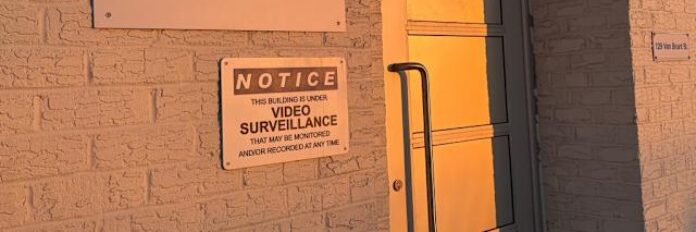
The financial footprint extends beyond construction. At a Brooklyn site on Van Brunt Street, the city has spent millions both to build and to maintain an empty facility, even as nearby programs receive far more applications than available seats. Parents in that area describe long waitlists and daily commutes to distant schools, raising questions about how demand was measured in the first place.
City officials have offered competing explanations. De Blasio has pointed to changes made under his successor, arguing that outreach efforts once kept enrollment high. Mayor Eric Adams has countered that his administration inherited a system already burdened with excess capacity and shifted focus toward stabilizing existing programs.
More recently, Mayor Zohran Mamdani announced plans to open several long-vacant sites, including some of the unused buildings, as part of a renewed expansion effort.
In the meantime, a handful of the empty facilities have been repurposed temporarily for charter schools or administrative uses, but most remain idle. An internal review into the unused sites has been launched, though its findings have not been released.
For parents navigating the system, the disconnect is hard to ignore: empty classrooms in some neighborhoods, long waitlists in others, and a growing bill attached to buildings that have yet to serve their intended purpose.