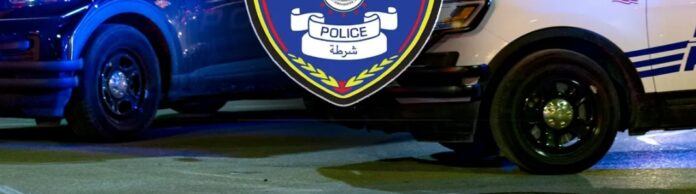
The Dearborn Heights Police Department in Michigan has made headlines by unveiling the first police patch in U.S. history to feature both English and Arabic lettering — a move it says is meant to “honor the diversity” of the city’s large Middle Eastern population.
Unveiled Wednesday evening on Facebook, the patch was designed by Officer Ermily Murdoc, whom the department praised for her “creativity and dedication.” The department emphasized that the Arabic lettering is optional and part of a broader effort to “better represent the people we serve” in a community where nearly 40 percent of residents trace their roots to the Middle East or North Africa.
The Dearborn Heights Police Department is the first in the nation to feature an Arabic script on their official police patch. https://t.co/wRCwAOY4x3
— FOX 2 Detroit (@FOX2News) September 4, 2025
The decision, however, is not without broader political context. Dearborn Heights — along with neighboring Dearborn, where more than half the population is of Arab ancestry — has long been a focal point of the intersection between immigration, assimilation, and political identity in America.
Both cities fall under the district represented by “Squad” member Rep. Rashida Tlaib (D-MI), a figure whose vocal criticism of U.S. policy in the Middle East has often placed her at odds with national Democrats and Republicans alike.
That tension was on display in the 2024 election. Despite its demographics, both Dearborn Heights and Dearborn tilted toward Donald Trump over Kamala Harris. In Dearborn Heights, Trump won 44 percent of the vote to Harris’s 38 percent, with Jill Stein pulling a remarkable 15 percent.
In Dearborn proper, Trump took 42 percent to Harris’s 36 percent, while Stein drew 18 percent. Religious leaders in the area issued conflicting letters leading up to Election Day, leaving the community politically divided — but clearly not solidly in the Democratic column.
Now the new patch comes just months after President Trump signed an executive order designating English as the official language of the United States. “A nationally designated language is at the core of a unified and cohesive society,” Trump said at the time, emphasizing assimilation as key to immigrant success.
That juxtaposition raises obvious questions: is a bilingual police patch an olive branch to a community with deep immigrant roots, or does it muddy the message of unity around a shared national language? Supporters see it as a gesture of inclusion; critics argue it risks undermining assimilation by codifying linguistic separatism, even symbolically.