
The Left’s latest political target isn’t a sitting politician or a current public figure. It’s a man who has been dead for more than a decade: Navy SEAL Chris Kyle.
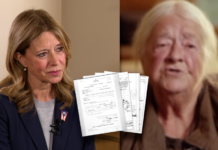
That reality helps explain why Taya Kyle, Chris Kyle’s widow, responded so forcefully after comments resurfaced from Maine Democratic Senate candidate Graham Platner. The remarks, made during a 2024 podcast appearance, questioned what Kyle’s battlefield record actually represented.
Platner, himself an Iraq War veteran, suggested that exceptionally high sniper kill counts could be the result of being less selective in the use of force rather than evidence of extraordinary skill and discipline. While he did not accuse Kyle of misconduct outright, the implication was clear enough for many veterans and military supporters to view the comments as an attack on Kyle’s reputation.
For Taya Kyle, the issue goes beyond politics. Chris Kyle cannot defend himself.
Graham Platner grossly smeared American war hero Chris Kyle.
Kyle’s widow Taya has a message for Platner:
“To me, nothing says, ‘I want attention’ more than disparaging a national hero who’s also dead. It’s transparent, it’s cowardly, it’s lowbrow.” pic.twitter.com/hOOiCdXloj
— Senate Republicans (@NRSC) May 27, 2026
Kyle remains one of the most recognizable military figures of the post-9/11 era. His service as a Navy SEAL sniper in Iraq became the subject of the bestselling memoir American Sniper and the blockbuster film that followed. But his legacy was never limited to confirmed kills or battlefield statistics.
After leaving military service, Kyle devoted significant time to helping fellow veterans struggling with the invisible wounds of war. His work focused heavily on assisting veterans dealing with post-traumatic stress and the difficult transition back to civilian life. That effort ended tragically in 2013 when Kyle was murdered at a Texas shooting range while trying to help a troubled former Marine.
Supporters argue that this commitment to fellow veterans reveals far more about his character than any debate over numbers recorded during combat operations.
Over the years, critics have challenged portions of Kyle’s memoir and questioned certain stories he told publicly. Such disputes are hardly unusual for high-profile military memoirs, particularly those involving classified operations or events that are difficult to independently verify. Yet despite those controversies, Kyle’s broader military record and reputation among many of his fellow servicemembers have remained largely intact.
“They gave up two lives – the one they were living and the one they would have lived.”
Today, we remember Chris Kyle(the Legend, the protector, the American Sniper)and Taya Kyle, the heart that stood beside him through every battle.
Chris answered the call with courage that… pic.twitter.com/IGtzUt5mSn
— Sassafrass84 (@Sassafrass_84) May 25, 2026
That is why Platner’s comments generated such a strong reaction. Critics saw them not as a debate over military tactics but as an attempt to diminish a decorated veteran’s service long after he was gone.
The controversy also raises a broader question about how Americans discuss the wars in Iraq and Afghanistan. Political leaders may disagree about the decisions that led to those conflicts, but many veterans argue that those disagreements should not be redirected toward the men and women who carried out the missions assigned to them.
Platner is free to express his views, and voters are free to judge them. But for many people, including Taya Kyle, questioning the integrity of a fallen service member’s record says more about the person making the criticism than the person being criticized.