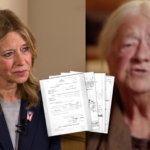

CNN anchor Abby Phillip delivered one of the sharpest media critiques yet of how former President Joe Biden’s cognitive struggles were handled by his inner circle, arguing that the real issue extends beyond Biden himself and into the political and media institutions that repeatedly insisted nothing was wrong.
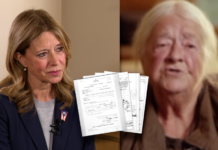
The discussion centered on Jill Biden’s upcoming interview and memoir, in which the former first lady offers a dramatically different account of the debate performance that effectively ended Joe Biden’s 2024 reelection campaign.
In a preview clip, Jill Biden says she was alarmed by what she witnessed on stage.
“I wasn’t horrified,” she said. “I was frightened because I had never, ever seen Joe like that before or since.”
She went further, describing her immediate reaction.
“I thought, ‘Oh my God, he’s having a stroke,’ and it scared me to death.”
Those comments immediately raised questions because they stand in stark contrast to what Americans watched unfold after the debate. Rather than expressing concern, Jill Biden publicly praised her husband during a post-debate event, telling supporters:
“Joe, you did such a great job. You answered every question. You knew all the facts.”
Phillip highlighted that contradiction during the panel discussion.
CNN’s Abby Phillips slams Democrats for lying about Joe Biden’s cognitive problems.
“What kind of political system covers that up? And makes it okay to lie to people about what everybody knows is true?” pic.twitter.com/EH5XILtQ9f
— Jeff Charles, Asker of Questions🏴 (@jeffcharlesjr) May 28, 2026
“It’s the first time that we’ve heard her express any concern about that debate that ultimately ended Joe Biden’s 2024 campaign,” Phillip said. “But that stands in stark contrast to what Jill Biden had to say just moments after the debate.”
Former ESPN personality and podcaster Jemele Hill also questioned the narrative that Biden’s condition suddenly emerged during the debate. Hill recalled seeing Biden at an NAACP event in Detroit and being concerned simply by watching him move.
“His speech was great,” Hill said. “But seeing him just make the walk to the stage, I was concerned. I was like, ‘Hey, this dude doesn’t look right.’”
For Phillip, the larger issue isn’t whether Jill Biden now admits she was worried. It’s why so many people spent years denying what millions of Americans believed they could plainly see.
“I appreciate that she’s saying this now,” Phillip said. “But the conversation should be had about the deceptiveness that was behind this.”
She then delivered perhaps the most pointed criticism of the discussion.
“What kind of political system covers that up and makes it okay to lie to people about what everybody knows is true?”
That question strikes at the heart of the controversy that has continued to grow since Biden left office. Throughout much of his presidency and reelection campaign, administration officials, Democratic leaders, and many media figures routinely dismissed concerns about his age and mental sharpness as partisan attacks or misinformation.
Yet after the debate, and especially after Biden’s withdrawal from the race, a flood of reporting emerged describing private concerns that had existed for months—or even years—inside the White House and Democratic Party.
The release of books such as Original Sin and the growing willingness of former aides to speak publicly have only intensified scrutiny of how those concerns were handled.
For many Americans, the issue is no longer simply Biden’s condition. It is whether political operatives, administration officials, and members of the media knowingly minimized or concealed information from the public while insisting that concerns were unfounded.
Rather than ending the debate over Biden’s cognitive decline, Jill Biden’s memoir tour appears to be reopening it—and drawing renewed attention to who knew what, when they knew it, and why the public was repeatedly told there was nothing to see.