The exposure of the anti-ICE Signal chats in Minneapolis did not end the activity they revealed—it merely forced it underground. What emerged over the weekend was not a spontaneous protest network, but what reporting has described as a deliberately organized system designed to monitor, track, and confront federal immigration agents in real time. And while the original chats were reportedly deleted after being exposed, new ones have already taken their place.
The initial reporting, first surfaced by journalist Cam Higby and then expanded upon by additional outlets, laid out a structure that went far beyond casual activism. According to screenshots and descriptions from the leaks, participants were divided into zones, each with its own daily Signal group that was created, dated, and deleted every 24 hours. The apparent purpose was operational efficiency—and, just as importantly, minimizing records that could later be scrutinized.
BREAKING: I obtained Minnesota State Rep Brad Tabke’s anti-ICE training manual
Brad appears to be the leader of the Scott County, MN rapid response anti-ICE watch Signal chat group.
INSANITY https://t.co/KefrdeigSw pic.twitter.com/6JGbX7Flme
— Libs of TikTok (@libsoftiktok) January 27, 2026
Within these chats, participants were assigned specific roles. “Mobile patrols” spent their entire shifts driving around Minneapolis looking for vehicles they suspected belonged to federal agents. When a possible match was identified, license plates were sent to designated “plate checkers,” who compared them against a shared database of known federal vehicles. Confirmed sightings were then broadcast to the group so others could converge on the location.
The scale described in the leaks was striking. Signal group chats reportedly reached the platform’s maximum capacity of 1,000 participants, at which point individuals not actively pursuing federal agents were asked to leave to make room. Dispatch-style voice calls, capped at roughly 50 participants, were said to be running constantly—meaning that, in each small zone, dozens of people could be mobilized at a moment’s notice to track agents on the ground.
Names connected to the chats have drawn particular attention. Screenshots and reporting allege that state-level Democrats, former political operatives connected to Governor Tim Walz, and members of the media—including NPR reporters—were listed as participants. One account, labeled “Flan,” was alleged to refer to Lt. Gov. Peggy Flanagan, though no official confirmation has been provided. Alex Pretti, who was later shot and killed during a confrontation with Border Patrol agents, was also identified as having been part of the network prior to his death.
What a “coincidence” that Tim Walz called President Trump to work together on the riots only *after* the Signal-gate chats were exposed.
The rope is tightening on Minnesota fraud. pic.twitter.com/Aw3xQLq0nr
— DC_Draino (@DC_Draino) January 26, 2026
According to federal accounts, Pretti was armed at the time of the encounter, though he reportedly did not have proper identification on him. The circumstances of the shooting remain under investigation, with body-camera footage from the agents involved currently under review. Supporters on the left have described the killing as an execution, while federal authorities maintain that Pretti interfered with an active law enforcement operation—an action they warn can have deadly consequences.
One of the more alarming aspects of the leaked material is the suggestion of local law enforcement awareness, if not cooperation. Messages circulating within the chats indicated that local police might intervene if ICE activity was deemed to “hinder public safety,” language that critics argue reflects a dangerously blurred line between lawful protest and obstruction of federal operations.
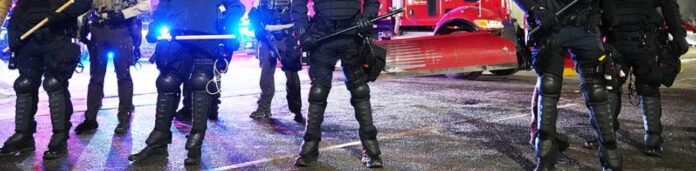
🚨THE TRUMP EFFECT! Minnesota police UNLEASHED, charging straight at these leftist rioters terrorizing federal agents at a hotel. Absolute chaos shutdown!
Walz and Frey bent the knee! pic.twitter.com/MyjRudGW3z
— Gunther Eagleman™ (@GuntherEagleman) January 27, 2026
In the wake of the exposure, participants reportedly scattered. Some publicly claimed they were leaving the country altogether. Others simply migrated to new encrypted channels, continuing the same activities with greater caution. The original chats may be gone, but the organizational blueprint remains intact.