
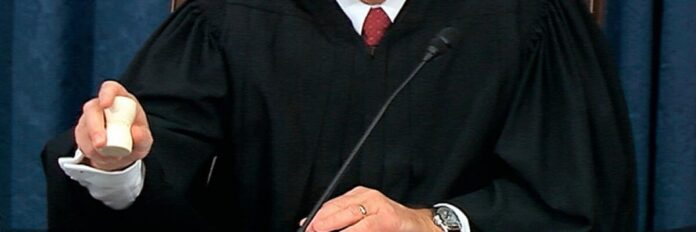
Chief Justice John Roberts’ decision to require nondisclosure agreements for Supreme Court clerks and permanent staff has been framed by some outlets as ominous, even sinister.
Read closely, however, the move reflects something far more mundane and far more troubling: the collapse of informal norms that once governed one of the most powerful institutions in American life. What is being described as secrecy is, in reality, an attempt to restore order after repeated breaches of trust that were rewarded rather than punished by a willing press.
The catalyst is obvious. The 2022 leak of the Dobbs draft opinion, published by Politico weeks before the Court was prepared to release it, shattered a tradition that had endured for generations. The damage went far beyond embarrassment. The leak triggered protests at justices’ homes, an unprecedented political firestorm, and a sustained effort to intimidate the Court into changing its outcome. Yet the investigation that followed produced no public accountability. The leaker was never identified, no consequences were aired, and the message to future clerks was unmistakable: leaking works.
This used to not be necessary because of the ethical duties that lawyers respected concerning their oaths, but clearly some of the most privileged no longer can be trusted to self-govern. This is why we can’t have nice things… https://t.co/9uL6wRwwud
— Harmeet K. Dhillon (@HarmeetKDhillon) February 2, 2026
Since then, the flow of internal details has not slowed. The New York Times, in particular, has published a steady stream of stories describing confidential deliberations, draft memos, and private negotiations among the justices. These accounts are invariably sourced to anonymous insiders and presented as brave transparency rather than what they plainly are: violations of trust by individuals using privileged access to advance political or ideological narratives. The same institutions now wringing their hands over nondisclosure agreements have shown no reluctance to publish the fruits of those betrayals.
Against that backdrop, Roberts’ move looks less like authoritarian overreach and more like a belated acknowledgment of reality. The honor system failed. Appeals to institutional loyalty failed. A generation of clerks and staff, increasingly shaped by activist legal culture, no longer views the Court as an institution to be protected but as a battlefield to be influenced. When honor becomes optional, contracts replace norms.
Critics argue that formal NDAs signal weakness, that the justices “feel under the microscope” and can no longer rely on trust. That is precisely the point. Trust was abused, publicly and repeatedly, with no cost imposed on those who broke it and no hesitation from media outlets that benefited from the leaks. To call the Court weak for responding is to confuse cause and effect. The weakness was tolerating the erosion for as long as it did.
The Supreme Court has always operated behind a veil. Its legitimacy depends on deliberation free from public pressure campaigns and real-time political warfare. The Dobbs leak demonstrated what happens when that veil is torn away selectively and weaponized. Requiring nondisclosure agreements does not make the Court more secretive than it already is; it merely acknowledges that honor alone is no longer sufficient to protect it.
The irony, of course, is that even as the Times laments the new NDAs, it continues to publish intimate details of the Court’s inner workings, suggesting that leaks have not stopped. That reality only reinforces the necessity of Roberts’ move. When confidentiality is treated as optional and betrayal as journalism, the only remaining defense is to put the rules in writing.