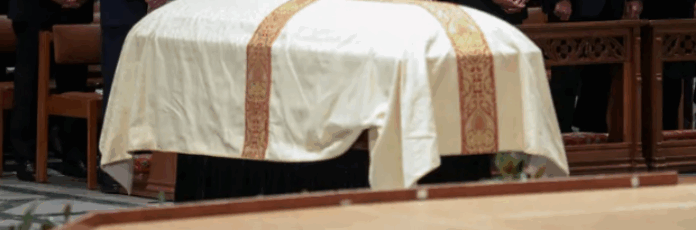
The funeral of former Vice President Dick Cheney, set for Thursday at Washington’s National Cathedral, is shaping up to be as much a reflection on a towering political legacy as it is a quiet commentary on the state of today’s Republican Party.
While more than 1,000 dignitaries are expected to attend—including presidents, justices, and Cabinet officials—two notable absences have already drawn attention: President Donald Trump and Vice President JD Vance were not invited.
According to reports confirmed by CNN and Axios, Cheney’s family made the deliberate choice to exclude both Trump and Vance from the invitation-only service. The message behind that decision, while unstated, is unmistakable.
Cheney, who passed away on November 3 at the age of 84, served as vice president from 2001 to 2009, during one of the most transformative—and turbulent—periods in modern American history. A veteran of Republican administrations dating back to the Ford era, he held titles ranging from White House Chief of Staff to Secretary of Defense.
But it was his role post-9/11 as the strategic force behind the Bush administration’s foreign policy—especially the invasion of Iraq—that defined his tenure and made him one of the most consequential, and controversial, vice presidents in American history.
The guest list for Thursday’s service reads like a who’s who of Washington’s political old guard. Former Presidents George W. Bush and Joe Biden will be in attendance, alongside an array of former vice presidents—Al Gore, Dan Quayle, Mike Pence, Kamala Harris—and Supreme Court Justices including Chief Justice John Roberts. Speaker Emeritus Nancy Pelosi, Senate Majority Leader John Thune, and Mitch McConnell will also be present.
Former Representative Liz Cheney, the late vice president’s daughter, will deliver a eulogy, along with her father’s former boss, George W. Bush. A few of Cheney’s grandchildren will also speak. The setting, the company, and the tone all suggest a moment of bipartisan reflection on an era when politics, though fiercely divided, was still defined by institutional reverence and personal restraint.
And that may explain the absence of Trump and Vance—both men emblematic of a GOP that Cheney, particularly in his final years, viewed as unrecognizable. His public criticism of Trump, echoed forcefully by his daughter Liz, was no secret. As the Republican Party’s internal fault lines deepened over the past decade, Cheney became, paradoxically, both a relic of neoconservatism and a symbol for a vanishing establishment ethos.
The funeral, in many ways, serves as a closing chapter for a certain brand of Republicanism: hawkish, hierarchical, institutional, and deeply embedded in Washington’s power structures. Cheney’s policies may remain controversial, but his stature within the halls of American government is undeniable—and Thursday’s guest list affirms that.